
There may be no greater example of the power of affordable housing paired with supportive services than in the HUD-VASH program for veterans.
How well does this model work? The rate of veteran homelessness in the U.S. dropped more than 55% from 2010 – 2022, compared to an 8.6% decline in homelessness among the general population (source). To date, three states and 84 communities across the U.S. have reached effectively ended veteran homelessness (source).
Here in Oklahoma, homelessness among veterans represents only 6% of total homelessness (source).
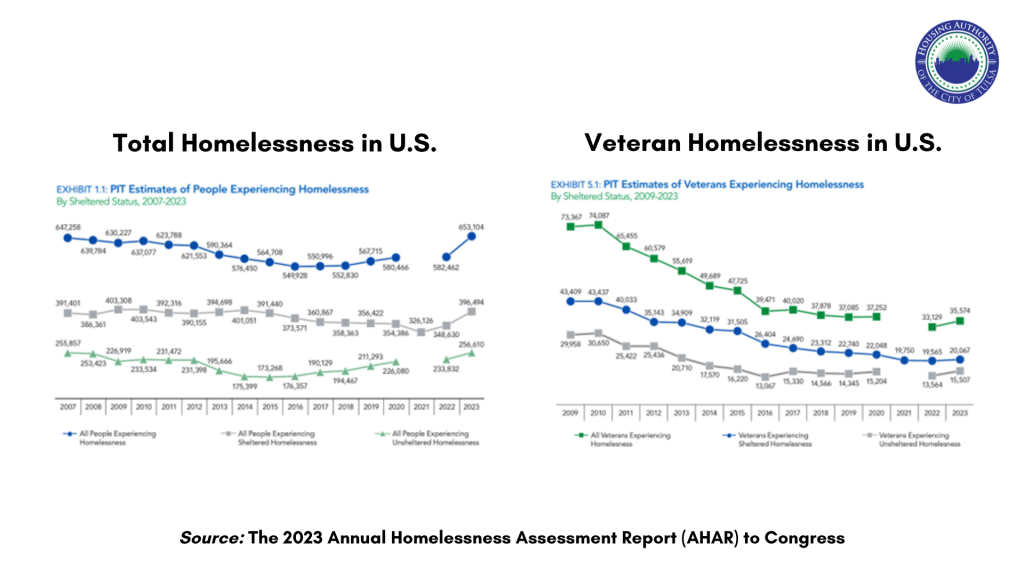
A recent New York Times article delves into the decline in veteran homelessness and attributes the successful reduction to Congressional funding. More specifically, John Kuhn, a veterans department official in Los Angeles, said “The fundamental reason why homelessness among veterans has fallen so much is that Congress has provided resources.”
In 2008, Congress reinvested in the HUD-VASH program, originally established in 1992. HUD-VASH is a collaboration between the U.S. Department of Housing and Urban Development (HUD) and Veterans Affairs (VA) that pairs permanent supportive housing with case management services for military veterans. This can include connection to supportive services, both provided by VA Medical Centers or other organizations in the community.
When veterans began returning from serving our country in Iraq and Afghanistan in 2007 Congress prioritized in preventing and reducing homelessness among this population, passing the HUD Appropriations Act in 2008, creating 10,000 HUD-VASH vouchers with an appropriation of $75 million. Congress has maintained that level of funding, creating an additional 10,000 HUD-VASH vouchers each year.
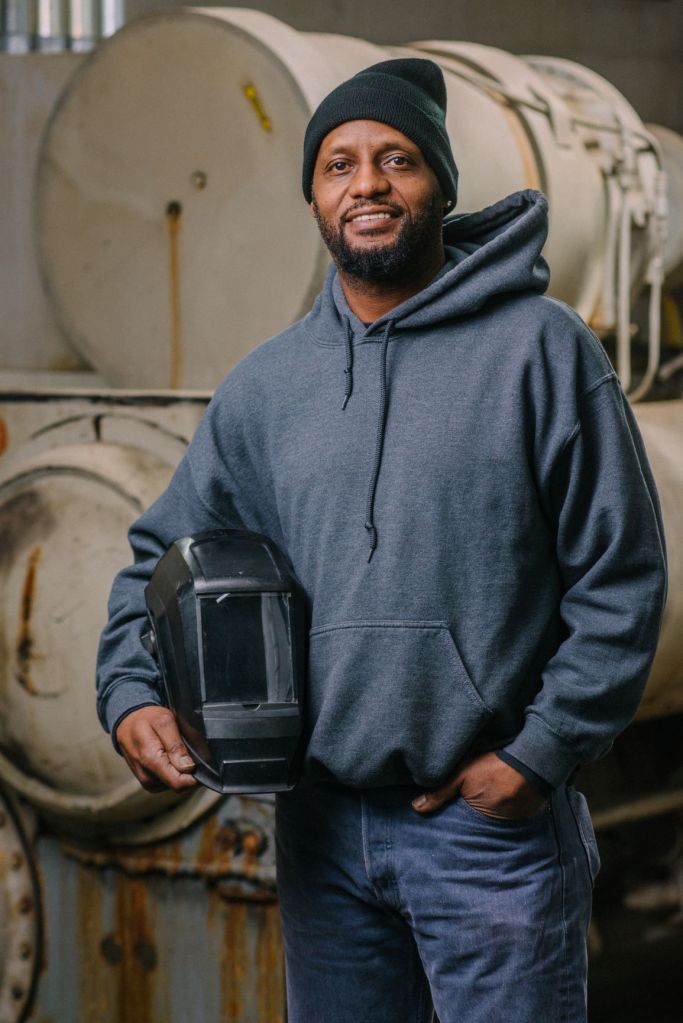
HUD-VASH participant
Other similar programs combining permanent supportive housing with case management have not only reduced homelessness but have saved millions of dollars in the process. A RAND Corp study of Los Angeles County Department of Health Services’ Housing for Health program found:
- 96% of participants stayed in the program for at least a year
- Program participants spent 75% less time in the hospital in the year after moving into supportive housing
- The county saved more than $6.5 million in the second year of the program
- The county saved $1.20 for every dollar spent
Sarah Hunter, a senior behavioral scientist who led the study evaluating the program, said, ‘“It makes a very compelling argument to say, ‘Look, if we provide housing and support, we can actually save money.”’
The steep decline in veteran homelessness is evidence that safe, stable, affordable housing in combination with case management is an effective strategy to reduce and prevent homelessness, and is also evidence that these types of interventions warrant investment. We know what works. We just need the resources to scale those proven solutions.
 Tulsa Housing Authority